
PELVIC HEALTH & POSTPARTUM PHYSICAL THERAPY · STAFFORD VA
Cesarean Recovery: Scar Mobility, Numbness & Rebuilding Your Core
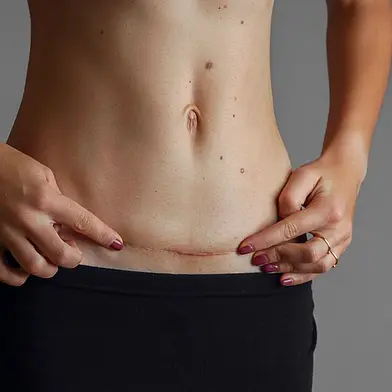
A cesarean is major abdominal surgery, but recovery often focuses on incision healing and medical clearance, not necessarily on how your abdominal wall, scar, core, and surrounding tissues function afterward. Physical therapy can help you understand what changed, address restrictions or sensitivity that may be affecting movement, and progressively rebuild strength and confidence after birth.
And if your cesarean was years ago? It isn't automatically too late to address a scar or movement problem that is still bothering you.
WHAT'S ASSESSED
What Does C-Section Recovery Physical Therapy Involve?
Cesarean recovery physical therapy looks beyond whether the incision has simply healed. Your evaluation may include:
At Divine Physical Therapy, the goal isn't to make you dependent on repeated hands-on treatment. Skilled manual therapy and scar mobilization may help address areas that feel restricted, sensitive, or difficult for you to change independently. From there, you'll learn how to build on those changes through movement, progressive strengthening, and strategies you can use on your own.
Care is provided one-on-one with a Doctor of Physical Therapy, with 75-minute appointments that allow time to assess, treat, teach, and progress. For mobile visits, your baby is welcome to remain with you.
Scar & surrounding tissue mobility
Sensitivity or altered sensation
Abdominal wall function
Breathing & pressure management
Core coordination
Strength & mobility
Lifting & movement demands
Pelvic floor function when relevant
The recovery nobody really explains. Reviewed by Dr. Thea Paige, PT, DPT, CMTPT, PCES
THE RECOVERY NOBODY REALLY EXPLAINS
After C-Section: Cleared Doesn’t Mean Recovered
After a cesarean, you may be told that your incision looks good and that you're cleared to return to activity. You may still notice:
These symptoms don't automatically mean something is wrong with your scar. They do mean it may be worth looking at the whole system rather than assuming everything should feel normal simply because enough time has passed.
Pulling or tightness around the scar
Numbness or altered sensation
Tenderness or sensitivity
Difficulty reconnecting with your core muscles
Weakness or pressure with lifting
Discomfort when standing tall or reaching
Difficulty returning to exercise
Back, hip, or pelvic symptoms
THE TISSUE ITSELF
What Actually Happens To The Tissue After A Cesarean?
A cesarean involves several layers of tissue, including the skin, connective tissues of the abdominal wall, and uterus. Those tissues don't all recover on the same timeline. The incision may appear healed relatively early in recovery while tissues underneath continue remodeling. Scar mobility, sensitivity, abdominal wall function, strength, and coordination may therefore continue changing beyond the initial postpartum period.
The abdominal muscles themselves are generally separated rather than cut during a typical cesarean. Rehabilitation isn't simply about "strengthening muscles that were cut." Recovery may involve restoring comfortable movement between tissue layers, rebuilding abdominal wall coordination, improving breathing and pressure management, and gradually restoring the strength and capacity needed for everyday life and exercise.

Mobility and sensation are different recoveries. A scar can become more comfortable and mobile even if an area of numbness remains. Likewise, altered sensation doesn't necessarily mean the tissue underneath isn't functioning well. Understanding that distinction can be reassuring, especially when numbness lasts longer than expected.
Reviewed by Dr. Thea Paige, PT, DPT, CMTPT, PCES
TIMING
When Can C-Section Scar Massage Start, And Does Age Rule It Out?
Direct scar mobilization should wait until the incision is fully closed and appropriately healed. Early postpartum care may begin with comfortable movement, breathing, positioning, and gentle work around the area rather than directly manipulating the incision. When direct scar work is appropriate depends on your individual healing, symptoms, and medical history. There also isn't a point when a scar automatically becomes "too old" to assess.
“How old is the scar?” → “What is limiting you now?”
If your cesarean was several years ago and the area still feels restricted, sensitive, uncomfortable, or connected to a movement limitation, it may still be worth evaluating. Many people don't receive cesarean rehabilitation during the first few months postpartum: sometimes they're busy caring for a newborn, sometimes no one tells them physical therapy is an option, and sometimes a restriction doesn't become noticeable until they return to exercise, have another pregnancy, increase their activity, or realize years later that something still doesn't feel right. You don't have to be six weeks postpartum for your concern to deserve an assessment.

WHAT SCAR WORK ACTUALLY DOES
What Does C-Section Scar Massage Actually Do?
The goal isn't to aggressively "break up scar tissue." Scar work is typically much more thoughtful than that. The goal is to assess how the scar and surrounding tissues move, identify areas that feel restricted or sensitive, and gradually improve comfortable movement and tolerance when appropriate.
At Divine Physical Therapy, Dr. Paige assesses what the tissue is actually doing rather than giving everyone the same scar-massage routine. When hands-on treatment is useful, the bigger goal is to teach you what you can safely continue on your own. Skilled hands can help create change. What you learn to do with that change is what carries recovery forward.
Selected Evidence: Early research specifically examining cesarean scars suggests that soft-tissue mobilization may improve some measures of scar stiffness, elasticity, flexibility, and pressure-pain sensitivity. However, the available research remains limited, so scar mobilization is best considered one potential component of rehabilitation rather than a stand-alone solution.
THE NERVES INVOLVED
Why Is The Skin Above My Scar Still Numb?
Small sensory nerves may be affected by the incision, and changes in sensation can take longer to improve than the visible scar itself. Some people notice a numb band above or around the incision. Others experience tingling, sensitivity, itching, burning, or other unusual sensations as the area recovers.
For some people, sensation gradually improves. For others, an area of altered sensation may persist. That doesn't necessarily prevent improvement in scar mobility, abdominal function, strength, movement, or comfort. When sensitivity is the larger concern, treatment may also include gradual desensitization strategies to help the area tolerate touch, clothing, pressure, and movement more comfortably.
NOT AN AUTOMATIC VERDICT
Can A C-Section Scar Contribute To Back Pain?
Potentially, but a scar shouldn't automatically be blamed for back pain. Postpartum back pain can have many contributors, including changes in strength, activity, sleep, lifting demands, breathing and pressure strategies, hip and trunk function, and the physical demands of caring for a growing child. Scar and abdominal wall mobility are simply additional pieces worth assessing when relevant.
This can be particularly useful when persistent symptoms have been treated only at the painful area without considering the abdominal wall, breathing, trunk function, hips, or pelvic floor. The goal is to identify what is actually contributing to your movement problem rather than assuming the scar is responsible simply because you had a cesarean.
BEYOND THE SCAR
What About My Deep Core After A C-Section?
Your core didn't disappear after surgery, and recovery isn't about finding one "magic" abdominal muscle. Your abdominal wall works with your diaphragm, pelvic floor, spine, hips, and surrounding muscles to manage pressure and transfer force. Pregnancy changes that system before a cesarean ever occurs. Rehabilitation may therefore include:
That might mean carrying your child, returning to running, lifting weights, getting back to sport, or simply moving through your day without feeling disconnected from your core. The goal isn't to keep you doing gentle "postpartum exercises" forever. It's to progressively rebuild the capacity your life requires.
Breathing & pressure management
Abdominal wall coordination
Progressive strengthening
Lifting & carrying strategies
Hip & trunk strengthening
Gradual return to exercise
Progression toward the demands that matter to you
WHY THE SETTING MATTERS
What Does Cesarean Recovery Look Like In Your Home?
For mobile appointments, care happens where you actually live. There's no need to pack the diaper bag, load the baby into the car, or organize your day around getting to a clinic. Your baby can remain with you. Feeding, soothing, repositioning, or taking a break can simply be part of the appointment. Your home also provides real-life clinical context.
For scar and abdominal treatment, your home also provides privacy without an open clinic or gym environment. Your 75-minute appointment gives us time to assess, provide skilled treatment when appropriate, and, most importantly, teach you what to continue between visits.
The couch or chair you feed on
The floor you get up from
The stairs you climb
The crib you lean over
How you're lifting & carrying your child
The positions that reproduce your symptoms
IS THIS YOU?
Cesarean Recovery Care Fits Whether The Birth Was Last Spring Or Years Ago.
The Pull Or Catch
Your scar or lower abdomen feels tight when you stand tall, reach, twist, exercise, or roll in bed.
The Numb Or Sensitive Area
The skin around your scar still feels numb, tingly, overly sensitive, or simply different.
The Core That Doesn't Feel Like Yours
You've been medically cleared, but your abdominal wall still feels weak, disconnected, or difficult to coordinate during exercise or everyday tasks.
The Back Or Hip Problem That Keeps Returning
You've addressed the painful area, but no one has looked at how your abdominal wall, scar, breathing, hips, and movement work together.
The Old Scar You Never Thought You Could Address
Your cesarean was years ago, but the area still bothers you and you've never had it properly assessed.
THE PHILOSOPHY
How Divine Approaches Cesarean Recovery
Skilled hands when they add value. Movement you can own. At Divine Physical Therapy, hands-on treatment isn't the finish line. When scar mobilization, manual therapy, or other skilled treatment is appropriate, it's used to address restrictions, sensitivity, or movement limitations that may be difficult to change independently. Then we build on that change: through movement, through strength, through better coordination, and through teaching you what your body responds to so you can continue making progress outside physical therapy.
HOW CARE CONTINUES, OR DOESN'T
Some clients may need only an evaluation, treatment, and an independent strategy. Others benefit from ongoing Movement Restoration Sessions, scheduled individually or, when a short period of consistent treatment is appropriate, through the optional four-visit Restoration Care Package. As you progress, your needs are reassessed; visits may be spaced farther apart or regular treatment may end as you become more confident managing independently. If a familiar restriction or flare-up needs skilled attention again later, returning clients can come back for a Targeted Tissue Reset. The goal isn't repeated scar treatment. It's skilled care where it adds value, and the tools and confidence to take it from there.
THE PHILOSOPHY
What Does The Research Mean For Your Care?
The information on this page reflects current research and clinical principles related to cesarean recovery, scar mobility, and postpartum rehabilitation.
Gilbert I, Gaudreault N, Gaboury I. Exploring the Effects of Standardized Soft Tissue Mobilization on the Viscoelastic Properties, Pressure Pain Thresholds, and Tactile Pressure Thresholds of the Cesarean Section Scar. Journal of Integrative and Complementary Medicine. 2022;28(4):355-362.
This exploratory clinical study examined standardized soft-tissue mobilization of cesarean scars. Two sessions were associated with improvements in several measured scar characteristics, including elasticity, stiffness, flexibility, and pressure-pain thresholds. Because this was a small proof-of-concept study, the findings are promising but don't establish scar mobilization as a universally effective treatment.
Deering RE, et al. Effectiveness of Physical Therapy Interventions on Physical Measures of Health After Cesarean Section Delivery: A Systematic Review. Journal of Women's Health Physical Therapy.
This systematic review examined physical therapy interventions following cesarean delivery. The included studies reported improvements in outcomes such as pain, physical disability, functional mobility, and abdominal muscle function. The authors also identified limitations in the quality of the available research, supporting an individualized rather than one-size-fits-all approach to rehabilitation.
Research specifically examining cesarean scar mobilization and rehabilitation is still developing. Current evidence supports a measured approach. Scar and surrounding tissue mobility can be assessed when restriction, sensitivity, discomfort, or movement limitations are present. Manual treatment may be incorporated when clinically appropriate, but scar mobilization isn't presented as something that universally "breaks up adhesions," restores sensation, eliminates a cesarean shelf, or explains every case of postpartum back, pelvic, or abdominal pain.
At Divine Physical Therapy, scar treatment is one potential component of a broader rehabilitation plan that may also address abdominal wall function, breathing and pressure management, pelvic floor function when relevant, mobility, strength, lifting, and progressive return to activity. Research informs the treatment. Your individual assessment determines how it applies to you.
KEEP READING
Where To Go Next
Pelvic Health & Postpartum
What pelvic floor therapy treats and how personalized in-home sessions work.
Diastasis Recti
Understanding abdominal separation, tension, function, and progressive strengthening.
Care & Investment
Evaluations, sessions, the Restoration Care Package, HSA/FSA use, and superbills.
YOUR QUESTIONS, ANSWERED
Frequently Asked

BEGIN WITH A DISCOVERY CALL
Ready To Find Out What Your Body Needs Now?
Start with a complimentary 15-minute Discovery Consultation with Dr. Paige. We'll briefly discuss what's been bothering you, how long it's been present, and whether Divine Physical Therapy appears to be an appropriate next step. If it is, we'll determine whether a Pelvic Health Evaluation or Comprehensive Movement Evaluation makes the most sense before you schedule.
Fifteen minutes. No cost. An honest conversation.